
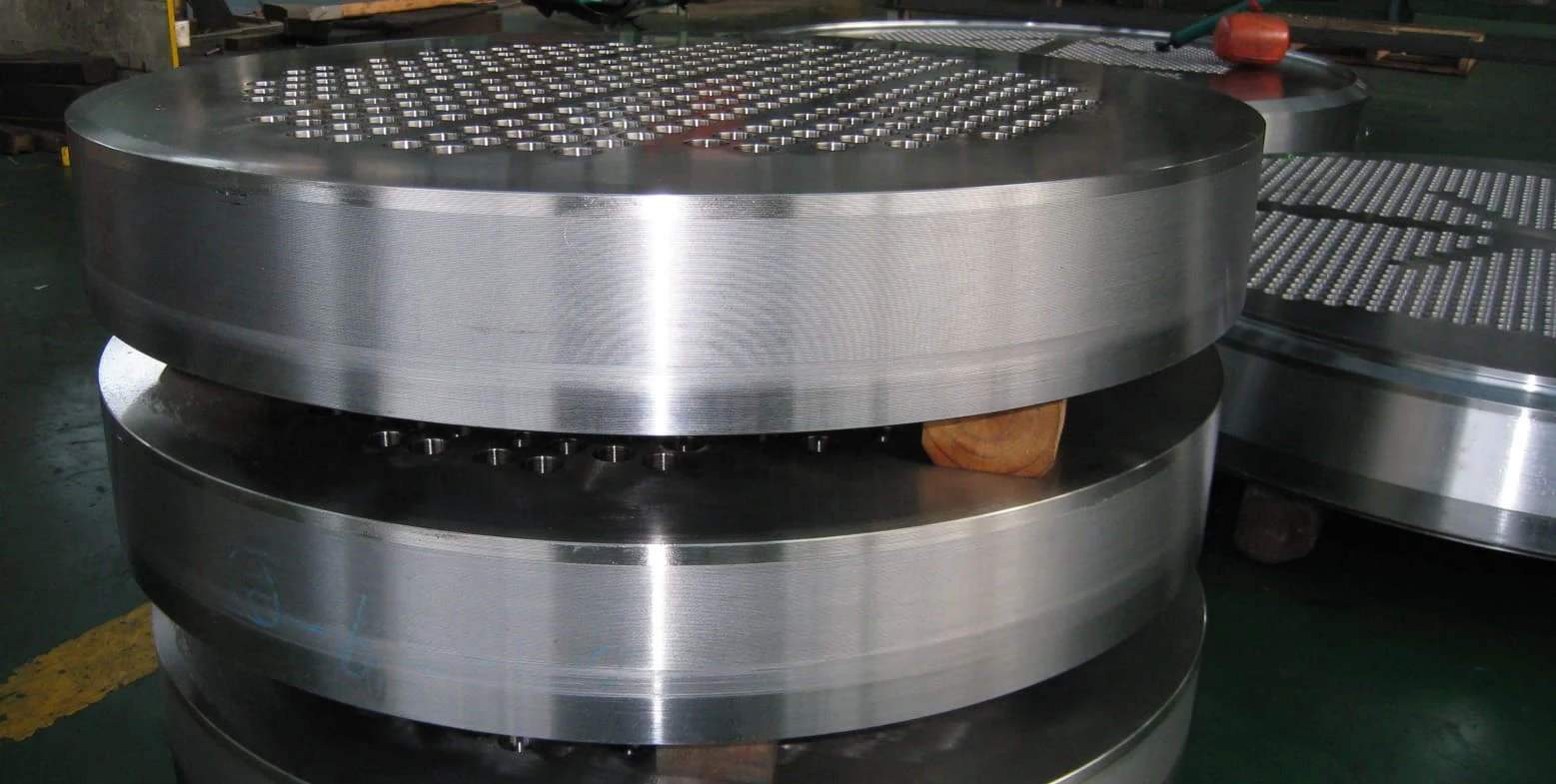
01 / OUR TECHNOLOGY
Explosion Welding.
Different metals. A lasting metallurgical bond.
Solid-state metal bonding.
Explosion welding uses a controlled, high-velocity collision to create a metallurgical bond between dissimilar metals. The solid-state process combines materials with different characteristics without bulk melting.
Clad materials bring corrosion resistance and other surface properties together with the structural performance of the base metal. Material selection and testing requirements are reviewed for each project.
PRODUCT FORMS
Product forms.
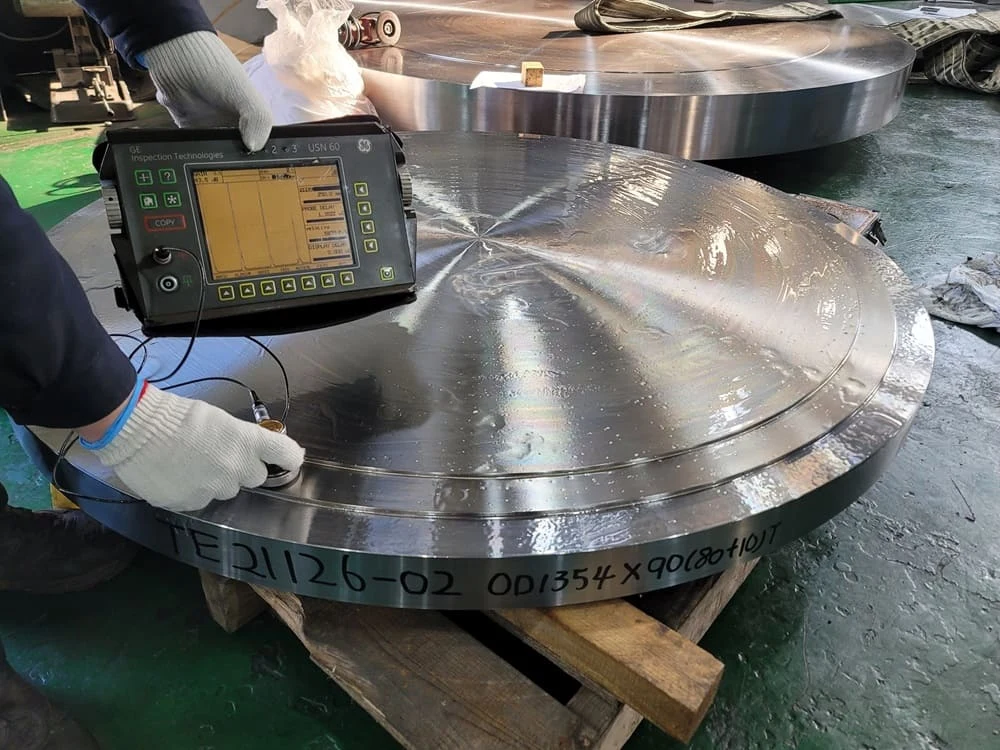
Inspected Clad Components
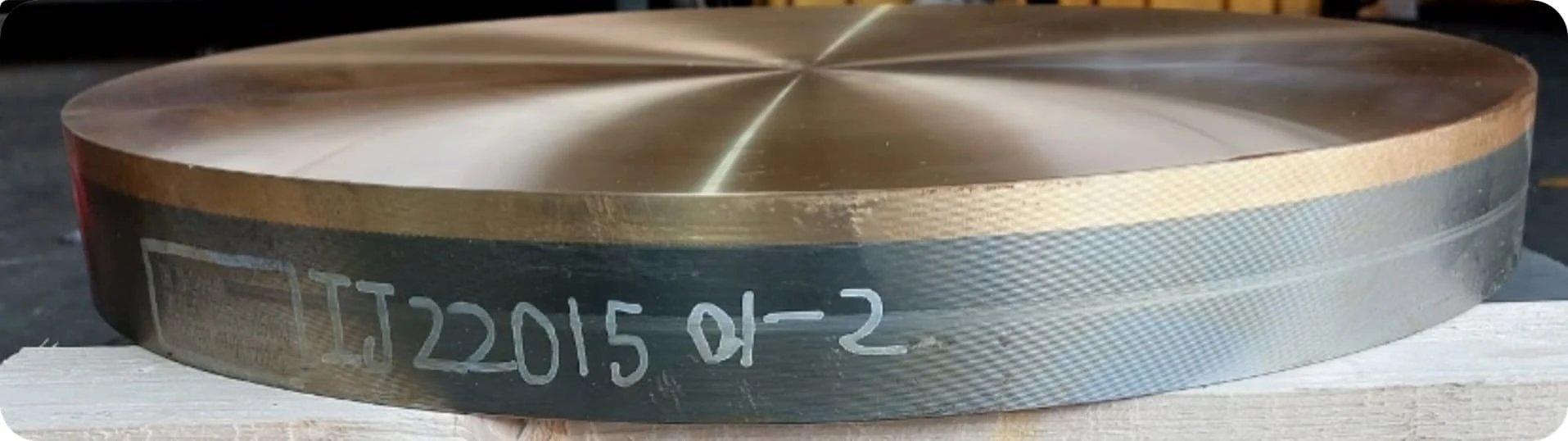
Machined Clad Rings
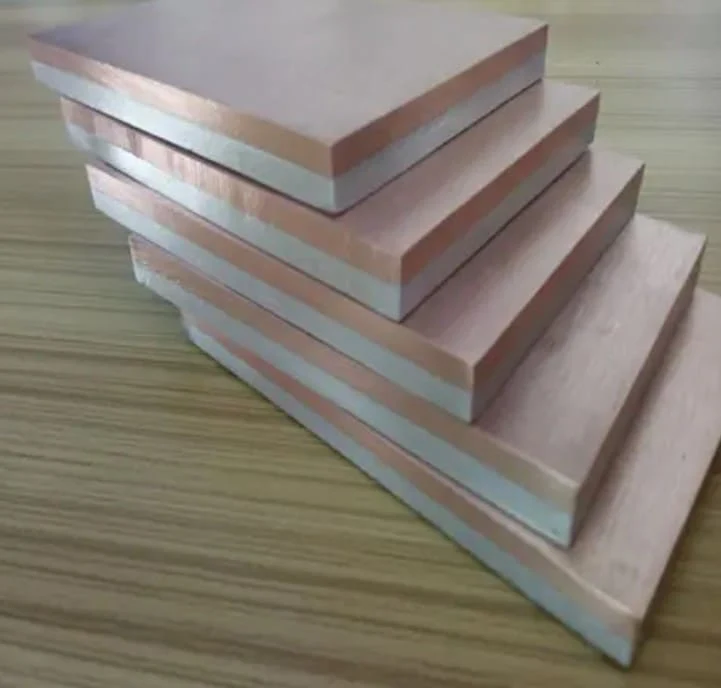
Transition Joints
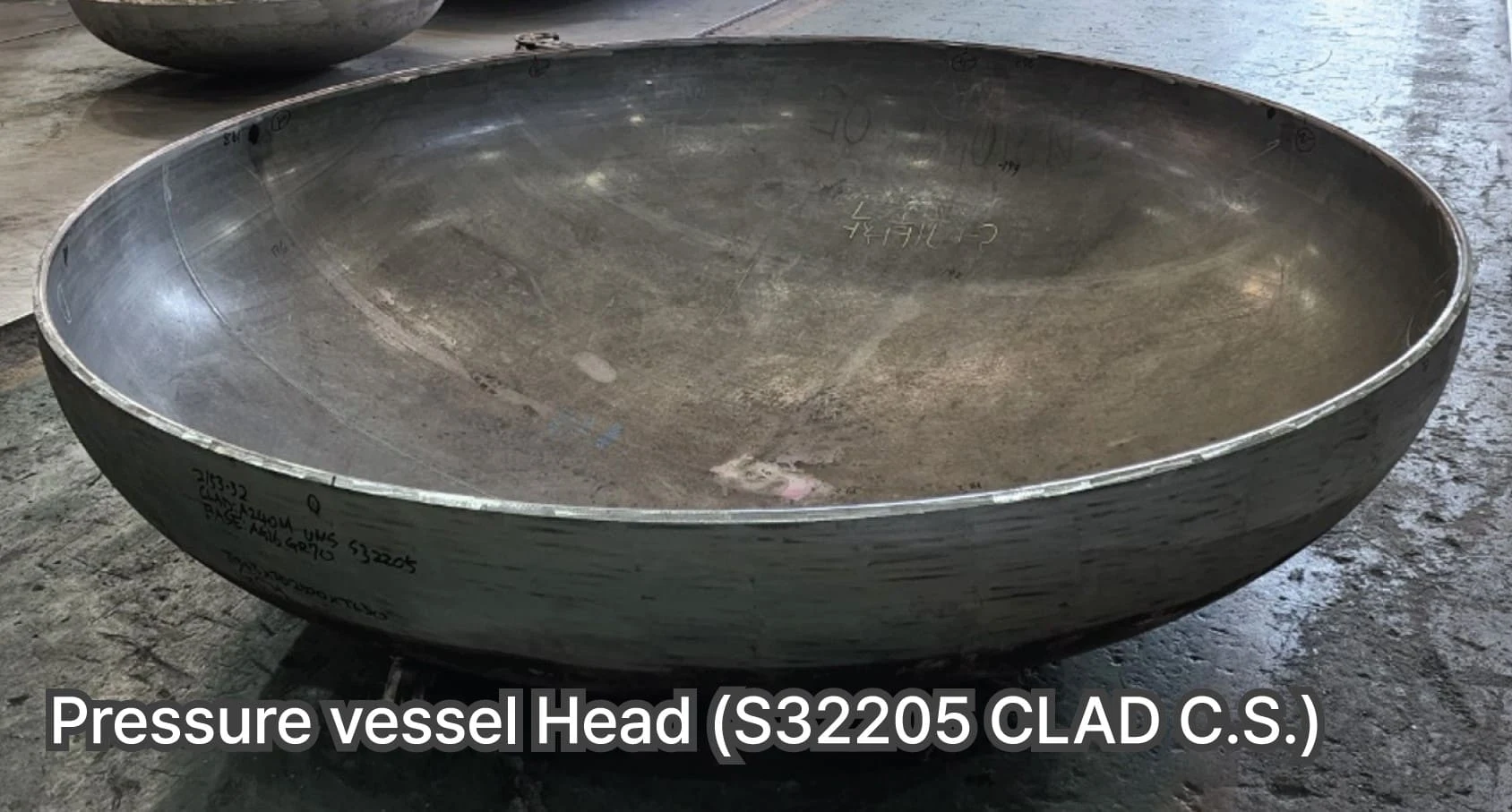
Pressure Vessel Heads
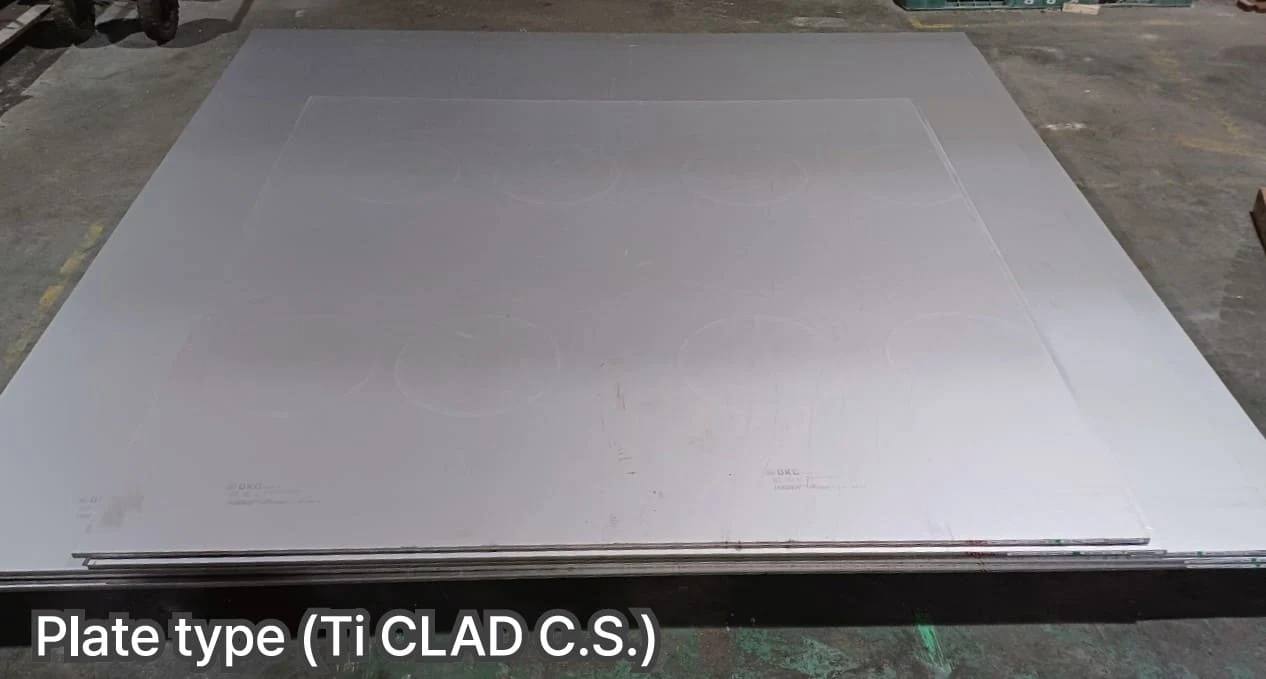
Clad Plates
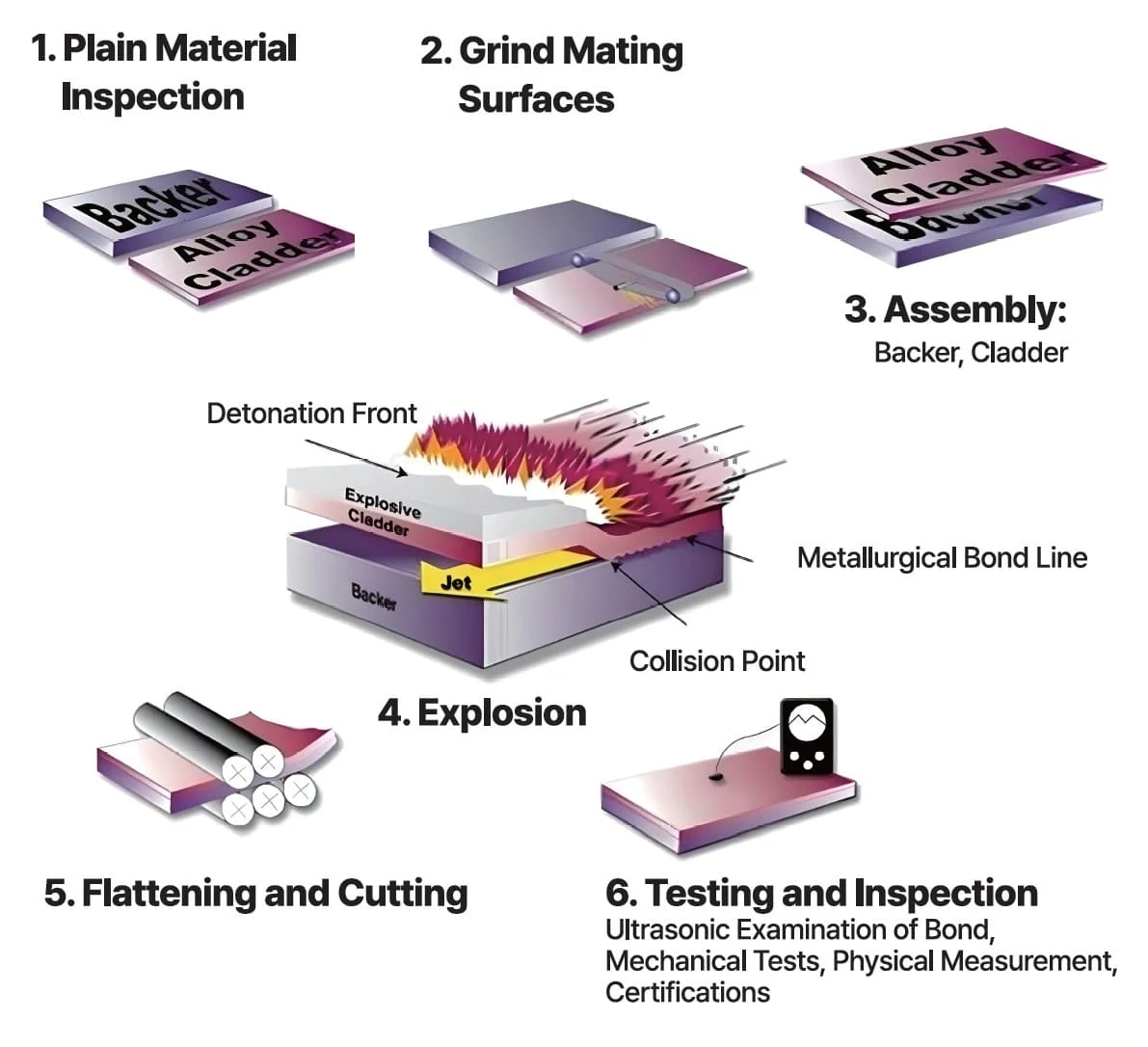
QUALITY AT EVERY STEP
Manufacturing process.
01
Material selection
02
Surface preparation
03
Assembly
04
Explosion bonding
05
Flattening & cutting
06
Testing & inspection
View the original manufacturing flow chart
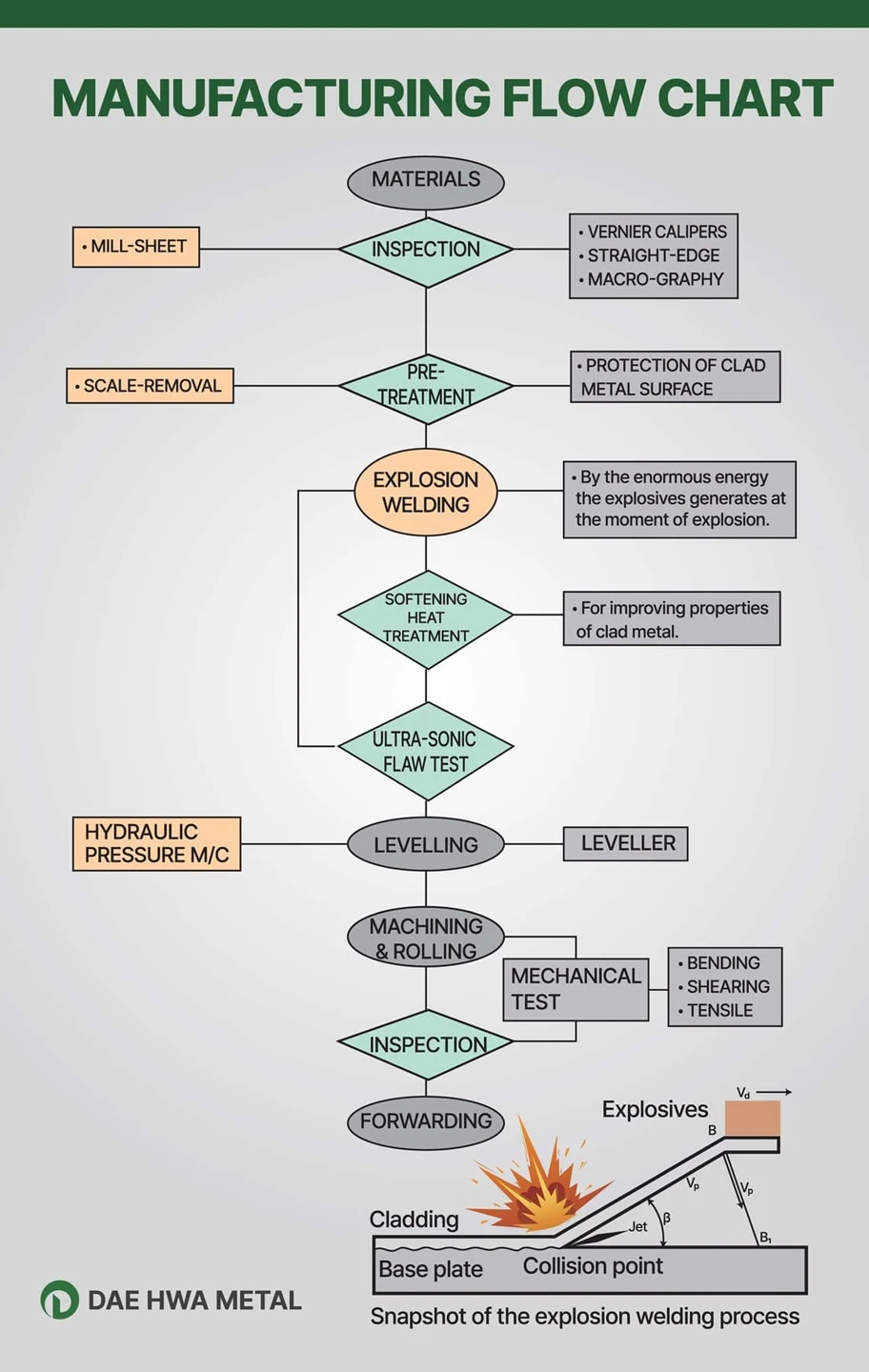
What is explosion welding?
Explosion welding is a solid-state process that uses a controlled high-velocity collision to form a metallurgical bond between dissimilar metals without bulk melting.